
The Sanctified Geography : Holy Ghats and The Trimbakeshwar Jyotirlinga
Nashik and Trimbakeshwar form a contiguous sacred terrain defined by ancient stone bathing ghats, sacred natural springs, and volcanic Sahyadri peaks where history, mythology, and architectural brilliance merge.
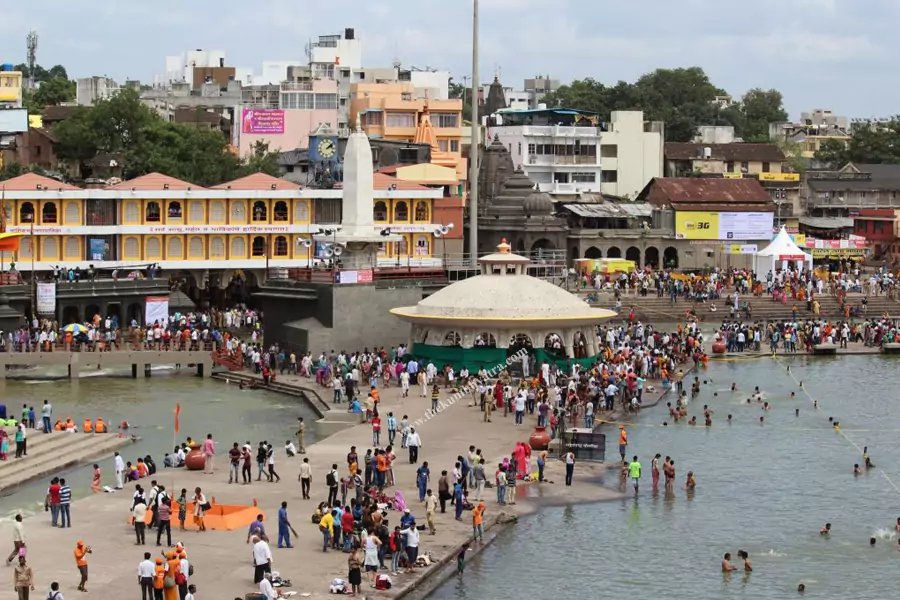
Ramkunda & The Godavari Ghat Complex ( Nashik )
Historical Background : Constructed in 1696 by Chitrarao Khatarkar, Ramkunda is and Engineered pond within the Godavari riverbed.
Mythological Importance : It is verified as the spot where Lord Rama bathed during his 14-year exile and where he performed the funeral rites ( Shraddha ) for his father, king Dasharatha.
The “Asthi Vilaya” Mystery : Ramkunda contains a natural underwater spring current where mortal bone ashes immersed by devotees dissolve unusually fast, symbolising the total reunification of the physical elements ( Panchbhuta) back into nature.
Surrounding Ghats:
Lakshman Kund : Adjacent to Ramkund, reserved for special purification baths.
Sita Kunda : A secluded, sacred stepped inlet tied to Mata Sita’s daily rituals.
Dussehra Ghat : The focal point for evening cultural assemblies and the Maha Godavari Aarti.
Kushavarta Kund ( Trimbakeshwar )
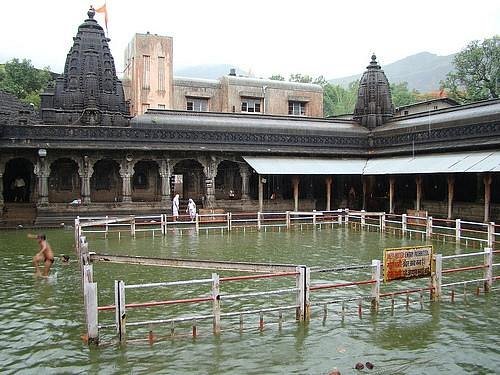
The Origin Story : When Sage Gautama inadvertently caused death of a cow at his hermitage, he performed thousands of years of penance to Lord Shiva on the Brahmagiri hill to bring holy Ganga down to earth to absolve the sin. As River Godavari rushed forth, Sage Gautama enclosed her waters with a ring of sacred Darbha ( Kusha ) grass, creating the bounded reservoir known today as Kushavarta.
Architectural Splendor : Built in the 1760’s by Maratha general Abaji Vishnu Jagat, this square stone Kunda is ringed by ornate verandas, shrines, and carved stepped walkways leading safely down to the water.
Kumbha Role : This is strictly designated water body for Shaivate and Dashnami Akharas during Simhastha.
Shree Trimbakeshwar Jyotirlinga Temple
Unmatched Uniqueness: Unlike all other 11 Jyotirlingas in India that depict only Lord Shiva, the Lingam at Trimbakeshwar features a natural depression holding three miniature thumb-sized Lingams representing the divine Trinity:
Lord Brahma (The Creator)
Lord Vishnu (The Preserver)
Lord Mahesh / Rudra (The Destroyer)
Temple Architecture: Commissioned by the third Peshwa, Balaji Baji Rao (Nanasaheb), in black basalt stone, the temple exemplifies Nagara-style architecture, featuring a massive courtyard, intricately carved mandapas, and an imposing Shikhara.
Crown Jewel: On Mondays and festival days, the Jyotirlinga is adorned with the historic diamond- and ruby-studded gold crown believed to date back to the Pandavas.
Brahmagiri & Gangadwar
Brahmagiri Hill: Towering 1,295 meters directly behind Trimbakeshwar, this mountain is revered as Lord Shiva’s actual physical hair (Jata). Devotees undertake a 750-step climb to visit the primary emergence point of the Godavari.
Gangadwar & Gorakhnath Cave: Midway up the cliff face lies Gangadwar, where river drops continuously drip through a sculpted cow-mouth (Gomukh), beside the legendary meditation cave of Mahayogi Gorakhnath.