
The Sacred Akharas of Kumbh Mela : Guardians of the Faith
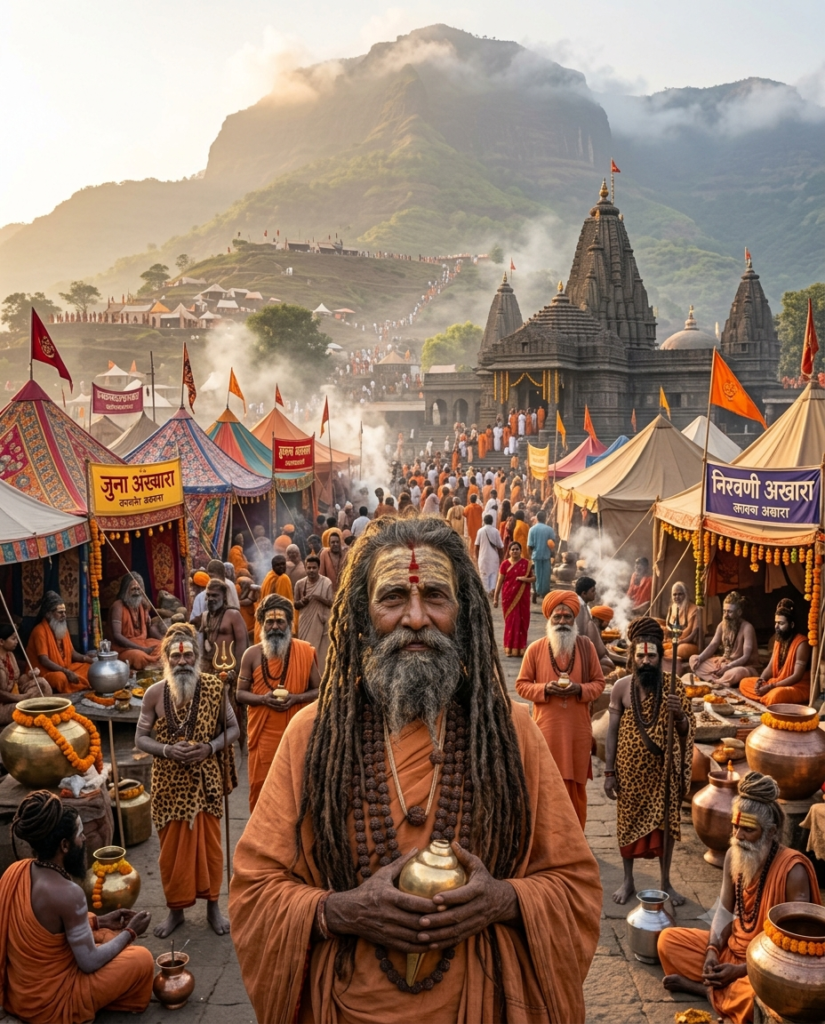
Akharas of Kumbh mela ( monastic warrior orders ) represents the defensive, philosophical, and ascetic backbone of Sanatana Dharma. During the Simhastha, their sprawling tent camps transform the Mela grounds into vibrant epicentres of scriptural debate, yoga and ancient rituals.
The Historical origin of Akharas
Akharas of Kumbh mela were Established by Jagadguru Adi Shankaracharya in the 8th century, Akharas were originally organised into armed ascetic divisions ( Shastra and Shaastra ) to defend temples, hermits, and pilgrims from invading forces, while preserving the intellectual traditions of Advaita Vedanta.
The Fundamental Division at Nashik – Trimbakeshwar
Historically, tensions over bathing precedence led the Peshwa rulers in 1789 to establish strict geographical partition that remains respected to this day :
The Shaiva ( Dashnami ) Orders at Trimbakeshwar : Devotees of Lord Shiva
The Vaishnava ( Ani ) orders at Nashik ( Panchvati ) : Devotees of Lord Vishnu and his avatars ( Rama & Krishna )
The udasin & Nirmal Orders : Syncretic spiritual lineages honouring the Guru Granth Sahib and Vedic thoughts, pitching camps in designated central zones.
The 13 Major Akharas of Kumbh Mela
A. The Shaiva Sanyasi Akharas ( Camping at Trimbakeshwar )
Shri Panch Dashnam Juna Akhada: This is the largest and one of the oldest monastic orders, revered as the spiritual base for the majority of Naga Sadhus. Dedicated to Lord Dattatreya, it is renowned for intense penance and traditional austerities. It commands the lead position in processions at Trimbakeshwar during the Kumbh Mela.
Shri Panchayati Akhada Mahanirvani: Dedicated to Kapil Muni, this akhada is celebrated for its deep scholarly contributions and administrative leadership within the monastic council. It historically balances Vedic scriptural study with defensive martial traditions. Its sadhus play a key governing role during the sacred bathing days.
Shri Panchayati Akhada Niranjani: Worshippers of Lord Kartikeya (Skanda), this order is widely recognized for its intellectual rigor and monastic discipline. It counts numerous Sanskrit scholars, doctors, and philosophers among its initiated members. It is among the wealthiest and most organized of the Dashanami orders.
Shri Panch Atal Akhada: One of the oldest Shaiva orders, Atal Akhada reveres Lord Ganesha as its presiding deity. It emphasizes removing spiritual obstacles and historically maintained an ancient order of warrior ascetics. It works in close ceremonial coordination with the Mahanirvani Akhada during royal processions.
Shri Panch Avahan Akhada: Dedicated to Lord Dattatreya and Shri Gajanana, this ancient order dates back over a millennium. It was historically established to respond swiftly to external threats to Sanatan Dharma. The akhada maintains deep ties and close ceremonial proximity to the Juna Akhada during processions.
Shri Panch Agni Akhada: Unlike other Shaiva sects, this akhada only initiates Brahmins and primarily worships the sacred fire (Agni) along with Gayatri Mata. Its sadhus commit to Vedic fire rituals, yagnas, and rigorous lifestyle discipline. The order historically does not feature weapon-wielding Naga Sadhus.
Shri Panch Anand Akhada: Dedicated to Lord Surya (the Sun God), this order traces its roots to Adi Shankaracharya’s Dashanami tradition. It focuses heavily on inner yoga, meditation, and spreading Vedantic philosophy. It traditionally aligns closely with the Niranjani Akhada during Kumbh rituals.
B. The Vaishnava Ani Akharas ( Camping at Nashik – Panchvati )
Shri Panch Digambar Ani Akhada: Recognized as the largest among the three Vaishnava Ani orders, its ascetics are devoted followers of Lord Rama and Lord Hanuman. Its members, often called Bairagis, practice severe austerities and renounce material possessions. They camp prominently at Sadhugram in Nashik and lead Vaishnava rituals at Ramkund.
Shri Panch Nirvani Ani Akhada: Primarily worshipping Lord Hanuman, this Vaishnava order is known for its discipline, physical endurance, and traditional arena sports. It played an active role historically in defending temple sites and pilgrim routes across northern and western India. It joins the Ramkund royal procession with grand elephant and flag displays.
Shri Panch Nirmohi Ani Akhada: Dedicated to Lord Hanuman, this akhada places deep emphasis on community service, spiritual learning, and temple management. It maintains widespread historical administrative influence across major Vaishnava holy towns like Ayodhya and Vrindavan. Its saints gather in large numbers at Nashik for devotional bhajans and kirtans.
C. The Udasin & Nirmal Akharas
Shri Panchayati Bada Udasin Akhada: Founded on the teachings of Sri Chand (son of Guru Nanak), this order bridges Vedic thought and the Udasin tradition. Its sadhus worship the holy syllable “Om” and the sacred fire (Dhuni), wearing minimal white or ochre attire. It maintains vast community kitchens (langars) and prominent camps at Nashik during the festival.
Shri Panchayati Naya Udasin Akhada: Established in the 19th century following an administrative divergence from Bada Udasin, it shares identical philosophical roots under Sri Chand. Its members focus on ascetic discipline, meditation, scriptural recitations, and widespread social service. It marches with distinct musical instruments and ceremonial flags to the Ramkund ghats.
Shri Nirmal Panchayati Akhada: Tracing its spiritual lineage to the scholars sent by Guru Gobind Singh to Varanasi, this order combines Sikh philosophy with traditional Vedanta. Its members wear clean white garments and strictly avoid weapon-based exhibitions, focusing instead on quiet kirtan and sacred study. The akhada participates in the holy dip alongside the other orders in Nashik.
The Royal Procession ( Peshwai )
The arrival of an Akhara in the Kumbha city is celebrated through the Peshwai—a majestic multi-kilometer procession where the Acharya Mahamandaleshwars ride atop decorated elephants, horses, and silver raths, flanked by sword-wielding Naga ascetics, conch-blowers, and brass bands.
Akharas Etiquette for Visitors
Dress Modestly: Pilgrims must wear traditional, non-revealing Indian clothing (dhotis, kurtas, sarees).
Photography Caution: Always ask verbal permission before photographing any sadhu, especially Naga Babas. Filming inside private prayer sanctuaries is forbidden.
Offerings: Modest offerings of fruit, flowers, incense, or nominal cash donations (Dakshina) are welcomed at the central Dhuni (sacred fire).