
Importance of Simhastha Kumbha Mela 2027 : The Divine Confluence of Godavari & Trimbakeshwar
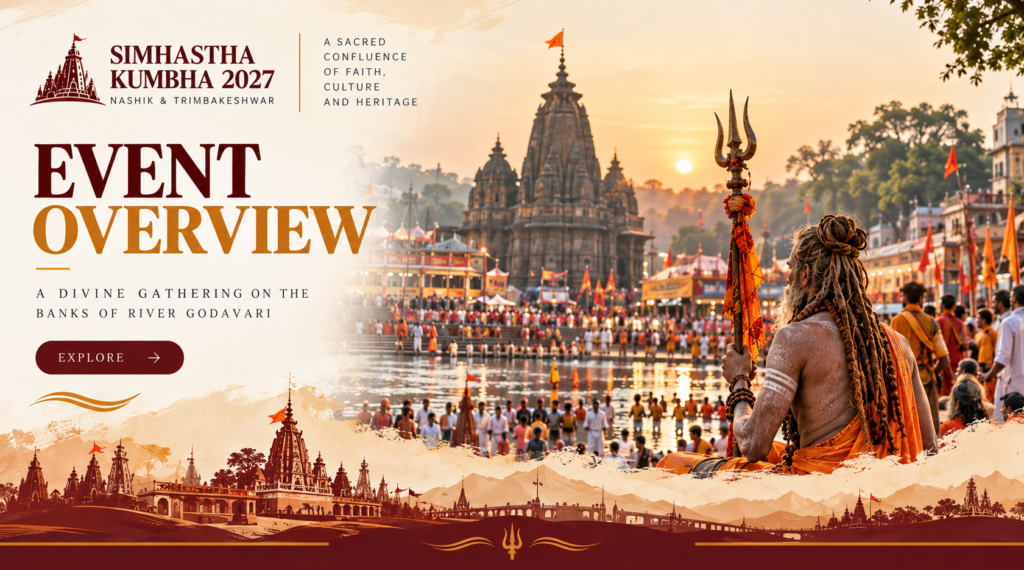
Importance of Simhastha Kumbh 2027 is going to be one of the prominent religious gatherings in Nashik and Trimbakeshwar, Maharashtra. This great religious event brings together lakhs of devotees, saints, spiritual leaders, Naga Sadhus and pilgrims from different parts of India and other countries. People visit Nashik to participate in holy rituals, take a sacred bath in the Godavari River, visit important temples and experience the spiritual atmosphere of Kumbha Mela.
Simhastha Kumbha holds a special place in Hindu religion and culture. It is traditionally organised approximately once every twelve years and is associated with specific planetary positions and religious beliefs. Nashik and Trimbakeshwar are considered important pilgrimage destinations because of their connection with Lord Shiva, the sacred Godavari River and several ancient religious places. During Kumbha Mela, these destinations become major centres of attraction for devotees who come to seek blessings and participate in religious activities.
The main attraction of Simhastha Kumbha is the holy bathing ritual known as Amrit Snan. During this period, devotees gather at designated bathing locations to take a sacred bath and offer prayers. Saints, Naga Sadhus and members of different Akhadas also participate in religious processions and traditional ceremonies. These activities represent the religious importance of Kumbha Mela and provide visitors with an opportunity to experience ancient Hindu traditions closely.
Apart from holy bathing and temple darshan, the presence of different Akhadas is another important feature of Simhastha Kumbha. Akhadas are religious organisations associated with different spiritual traditions and groups of saints. During Kumbha Mela, visitors may have the opportunity to learn about their traditions, observe religious processions and understand the role of saints and Naga Sadhus in Hindu culture. Juna Akhada, Panchayati Akhada, Nirvani Akhada and other religious groups are associated with the wider tradition of Kumbha gatherings. However, access to specific Akhadas and religious activities depends on the arrangements and permissions applicable during the event.
Importance of Simhastha Kumbh : The Astronomical & Astrological Phenomena
The word Simhastha translates to “Jupiter in the constellation of Leo”( Simha Rashi )
The Cosmic Mechanics: While Prayagraj, Haridwar, and Ujjain align with other planetary transitions, the Nashik-Trimbak Kumbha activates specifically when Guru (Jupiter) enters Leo, and the Sun enters Cancer (Karka Sankranti) or Leo with a new moon.
The Amrita Activation: According to ancient Vedic calculation (Jyotisha Shastra), this planetary combination charges the earthly waters of the Godavari basin with high-frequency electromagnetic and spiritual vibrations, turning ordinary river water into Amrita (the nectar of immortality).
The Mythological provenance : Samudra Manthan
During the Satya Yuga, Devas (gods) and Asuras (demons) churned the cosmic ocean of milk (Ksheera Sagara) using Mount Mandara and the serpent Vasuki to obtain the pot (Kumbha) of Amrita. As Lord Dhanvantari emerged with the divine vessel, Garuda flew across the skies to protect it from demonic forces.
During the ensuing chase, which lasted 12 divine days (equivalent to 12 human solar years), four drops of nectar spilled upon earth:
1. Haridwar (River Ganga)
2. Prayagraj (Triveni Sangam)
3. Ujjain (River Shipra)
4. Nashik & Trimbakeshwar (River Godavari and Brahmagiri)
At the spot where the drops blessed Maharashtra’s Sahyadri range, the sacred river Godavari sprang forth from the locks of Lord Shiva through the penance of Sage Gautama, sanctifying the twinned lands of Nashik and Trimbakeshwar.
The Dual-Seat Tradition : Nashik vs. Trimbakeshwar
Unlike other Kumbh Melas centered on a single riverbank, Simhastha Kumbha is divided into two sovereign sacred zones separated by 28 kilometers:
Nashik (Panchavati / Ramkund): The domain of Lord Rama, Lakshmana, and Sita during their exile (Vanvaas). This is the epicenter for Vaishnava Akharas, householders, and ancestral salvation rites (Pitru Tarpan).
Trimbakeshwar (Kushavarta Kund): The seat of one of the 12 sacred Jyotirlingas. This is the domain of Lord Shiva, the renounced Naga Babas, and the ancient Shaiva monastic orders.
Importance of Amrit Snan
Amrit Snan is one of the most important religious activities associated with Kumbha Mela. During the designated bathing periods, devotees gather at the prescribed locations to take a holy bath in accordance with their religious beliefs. The ritual is considered spiritually significant and is an important reason why pilgrims travel from different parts of the country to attend the event.
The bathing ceremonies also involve saints, Naga Sadhus and members of different Akhadas, who participate in traditional processions and religious activities. These ceremonies represent the long-standing traditions of Kumbha Mela and attract the attention of devotees and visitors. Since bathing schedules and arrangements are determined by the relevant authorities, visitors should follow official announcements and instructions while planning their journey.